
Where Sharmax vehicles are made: inside its global production network
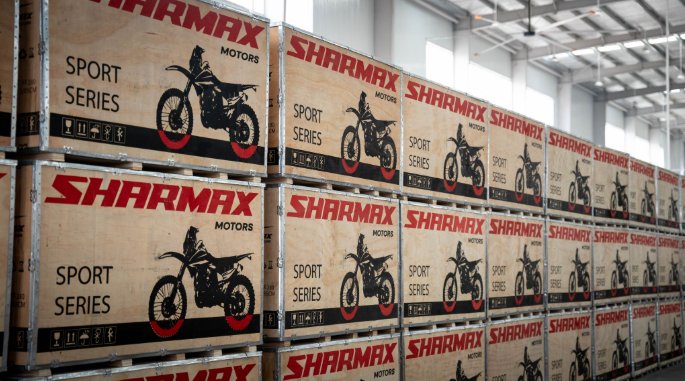
Sharmax Motors is an international manufacturer of motorcycles and powersports vehicles, with a range that extends from road and off-road motorcycles to ATVs, buggies and other recreational vehicles. In 2026, the company marks ten years as an international business and operates across five continents.
Its production model is international as well. Sharmax combines its own manufacturing capacity with industrial partnerships and a network of regional hubs serving different markets.
How Sharmax works with Benelli and QJMOTOR
One of the most important parts of this manufacturing structure is Sharmax’s partnership with Benelli, established in 2025.
The cooperation initially focused on a new generation of mid-displacement road motorcycles for Europe. It has since expanded into manufacturing, product development and spare-parts support.
Benelli has been part of the Qianjiang industrial group since 2005. The same group is behind QJMOTOR and has an annual production capacity of around 1.2 million vehicles, giving the partnership access to a large established motorcycle manufacturing base.
The manufacturing connection is direct. In July 2026, Zhejiang Qianjiang Motorcycle Co., Ltd. issued an official declaration confirming that Sharmax-branded motorcycles are produced at QJ Motor facilities. According to the declaration, they use the same technological processes and quality-control systems applied to QJ Motor’s own vehicles.
This industrial base supports Sharmax road-bike categories including supersport motorcycles, touring models, cruisers, naked bikes and maxi-scooters.
How the production model works
Sharmax’s manufacturing structure extends beyond one factory or one product category.
The company currently reports annual production of more than 50,000 vehicles. Its manufacturing facilities cover different types of powersports equipment, while production runs from component work and assembly through final inspection.
Quality control is built into several stages of development. Sharmax says its vehicles are checked from the prototype stage and tested in conditions such as heat, sand, high humidity and rough terrain before reaching production.
The company also works with established component suppliers. Depending on the model, Sharmax motorcycles can use braking systems from Brembo, Marzocchi suspension and Bosch fuel-injection technology.
This allows the company to combine large-scale manufacturing with components and technologies sourced from specialist suppliers.
From production to regional markets
The other side of Sharmax’s model is its geographic reach.
The Gulf region has become one of its most developed markets for Sharmax, with operations in the UAE, Qatar, Oman and Saudi Arabia. Dubai currently serves as an important regional base.
In North Africa, Sharmax entered Egypt with a local showroom and online operation.
The company has also established positions in Kazakhstan and Belarus, giving it a base in CIS markets.
Europe represents another growth area. Spain has become an important entry point, while the Benelli partnership is supporting the development of a wider road-motorcycle range for European riders.
In Latin America, Mexico serves as a regional hub and one of Sharmax’s main bases for further expansion.
Production is therefore linked to a wider system of regional hubs, showrooms and distribution channels rather than operating separately from the markets where the vehicles are sold.
Local infrastructure completes the network
Sharmax also develops service and parts support alongside its retail presence.
That becomes particularly important as the company enters more markets. Vehicles may be manufactured through an international production network, but owners still need local access to maintenance and replacement components.
The Benelli cooperation follows the same principle. Benelli Q.J. also supplies spare parts for Sharmax motorcycles, connecting manufacturing with longer-term after-sales support.
Sharmax’s production geography is therefore broader than a list of factory locations. Manufacturing facilities in Asia, cooperation with Benelli and Qianjiang, and regional operations from the Gulf to Europe and Latin America form parts of the same system.
That structure is what allows Sharmax to operate as an international powersports manufacturer while adapting its product range and support network to individual markets.

